
Two Principles for Structure
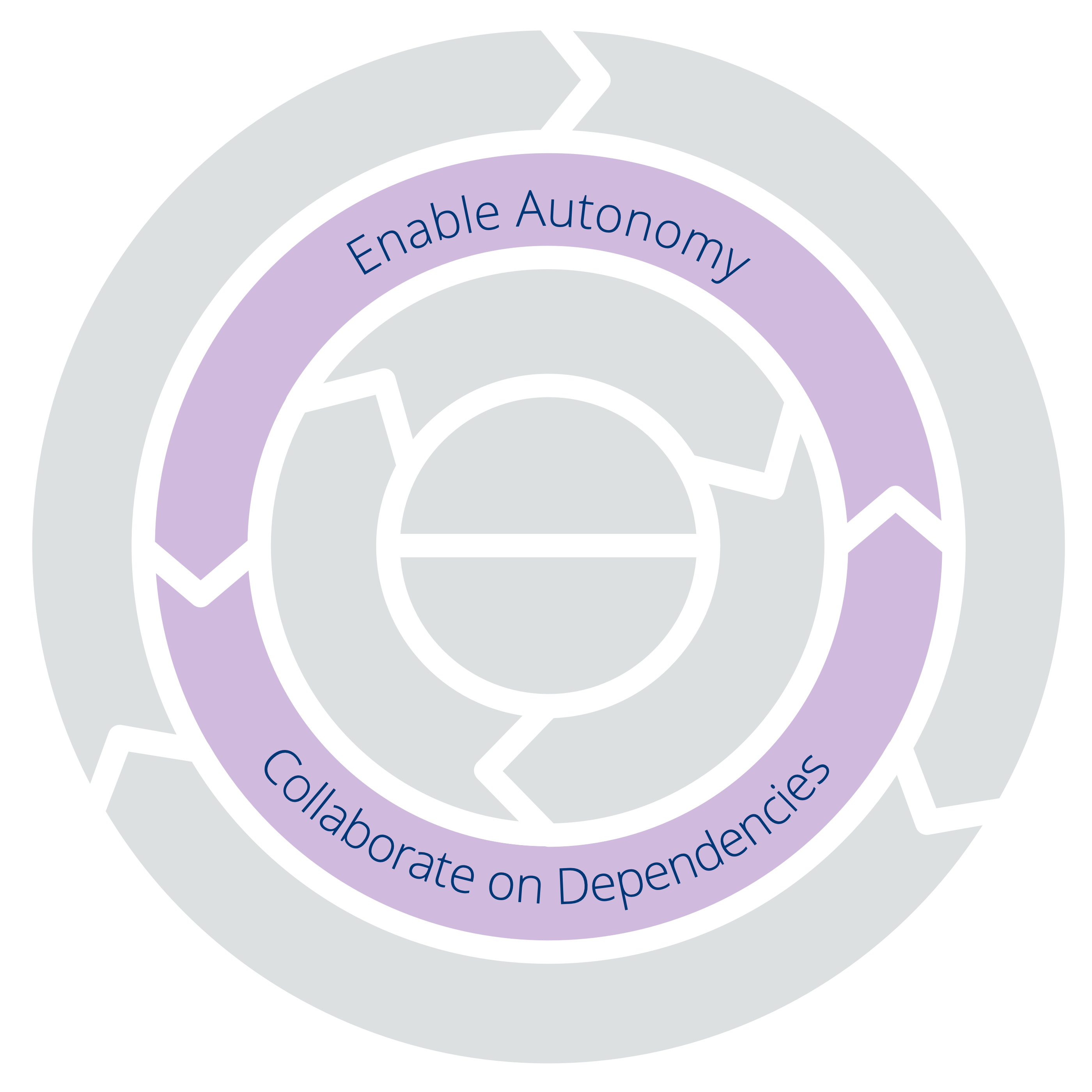
Principle 6 — Enable Autonomy
Free individuals and teams up to create value as autonomously as possible, so that you can deliver value fast and avoid unnecessary dependencies.
Essential patterns to help you achieve this:
- Clarify and Develop Domains — When people understand their own areas of responsibility, and those of others too, they know what is expected of them and where they are dependent on others.
- Pull System For Work — People being able to pull in new work items when they have capacity eliminates overload and improves productivity.
- Role — Delegating autonomy to an individual to decide and act within clearly defined constraints frees individuals up to create value, and enables those who delegate to retain as much influence as necessary.
- Circle — Delegating autonomy to a team to organize and govern themselves within clearly defined constraints frees the team up to create value, and enables those who delegate that authority to retain as much influence as necessary.
- Clarify and Develop Strategy — A strategy for creating value, developed by the individual or team and agreed upon by all relevant stakeholders, builds trust and supports autonomy.
- Development Plan — Collaborating with relevant stakeholders on developing a plan for how to improve helps a team or individual in a role develop their skill and competence, and builds trust among all concerned.
- Align Flow — Moving decision-making close to where value is created while retaining the influence of the relevant stakeholders supports the flow of value, and eliminates unnecessary dependencies and delays.
Principle 7 — Collaborate on Dependencies
Co-create and evolve a coherent system to deal with all dependencies, so that you deliver value fast when dependencies cannot be avoided.
Essential patterns to help you achieve this:
- Navigate via Tension — Everyone in the organization paying attention to dependencies maximizes the potential for unmanaged dependencies to be identified and responded to.
- Clarify and Develop Domains — When people understand their own areas of responsibility, and those of others too, they also understand where collaboration on dependencies will be necessary.
- Visualize Work — Visualizing work items and the dependencies between them makes it easier to manage dependencies in cooperation with the relevant stakeholders.
- Respond to Organizational Drivers — Understanding why a dependency exists in the first place, and ensuring it is taken care of, is essential for collaborating on managing or resolving dependencies.
- Involve Those Affected — To address dependencies in an effective way, it often helps to gather the perspectives of all (relevant) stakeholders and involve them in the decision-making process.
- Linking — Dependencies between two teams can often be addressed effectively by sending a Representative to the decision-making of the other team, to ensure all relevant perspectives are considered and ownership of decisions is shared.
- Delegate Circle — When teams depend on each other, they can delegate the authority to make and evolve policies relating to specific dependencies to a circle of Representatives, to bring together relevant perspectives and generate ownership among all represented teams.
- Align Flow — Moving decision-making close to where value is created brings together the people necessary for making decisions in response to specific dependencies and eliminates unnecessary decision-making bottlenecks.
- Create a Pull System for Organizational Change — Invite and enable the people affected by dependencies to make changes to organizational structure, to address those dependencies and facilitate the ongoing evolution of a coherent and effective organization.

 Read next: Three Principles for Transformation