
Governance Meeting
In the case of a single individual attending to a domain without the need to involve others, it’s still valuable to schedule time for governance on a regular basis to develop your own policies that enable you to be and remain effective.
The main purpose of people’s efforts in any domain is to deliver value to the people they serve. This is mainly achieved during day-to-day activities (operations). However, for operations to be and remain effective and efficient, it is essential to spend time regularly addressing governance matters: deciding on how you do things, evaluating the effectiveness of your policies, and addressing challenges and opportunities beyond the scope of individual work items. These activities often get lost when the operational workload is overwhelming, and deadlines are looming, which can lead to increased stress over time, systemic challenges not being addressed, and missed opportunities.
Scheduling a regular Governance Meeting for a domain ensures that the time for governance is set aside and that all people responsible for making significant decisions (e.g. team members, delegators, or representatives from other domains) can be present, so that , so that challenges and opportunities are addressed promptly, and operations run smoothly over time.
A structured and facilitated meeting with a clear, prioritized agenda supports a group in staying focused and productive. Adding a time box to each agenda item helps keep discussions on point. If certain items take too long to resolve, review their priority and consider whether additional information or resources are needed to progress.
The Structure of a Governance Meeting
A governance meeting is usually:
- facilitated
- prepared in advance
- time-boxed for 90-120 minutes
- scheduled every 2-4 weeks
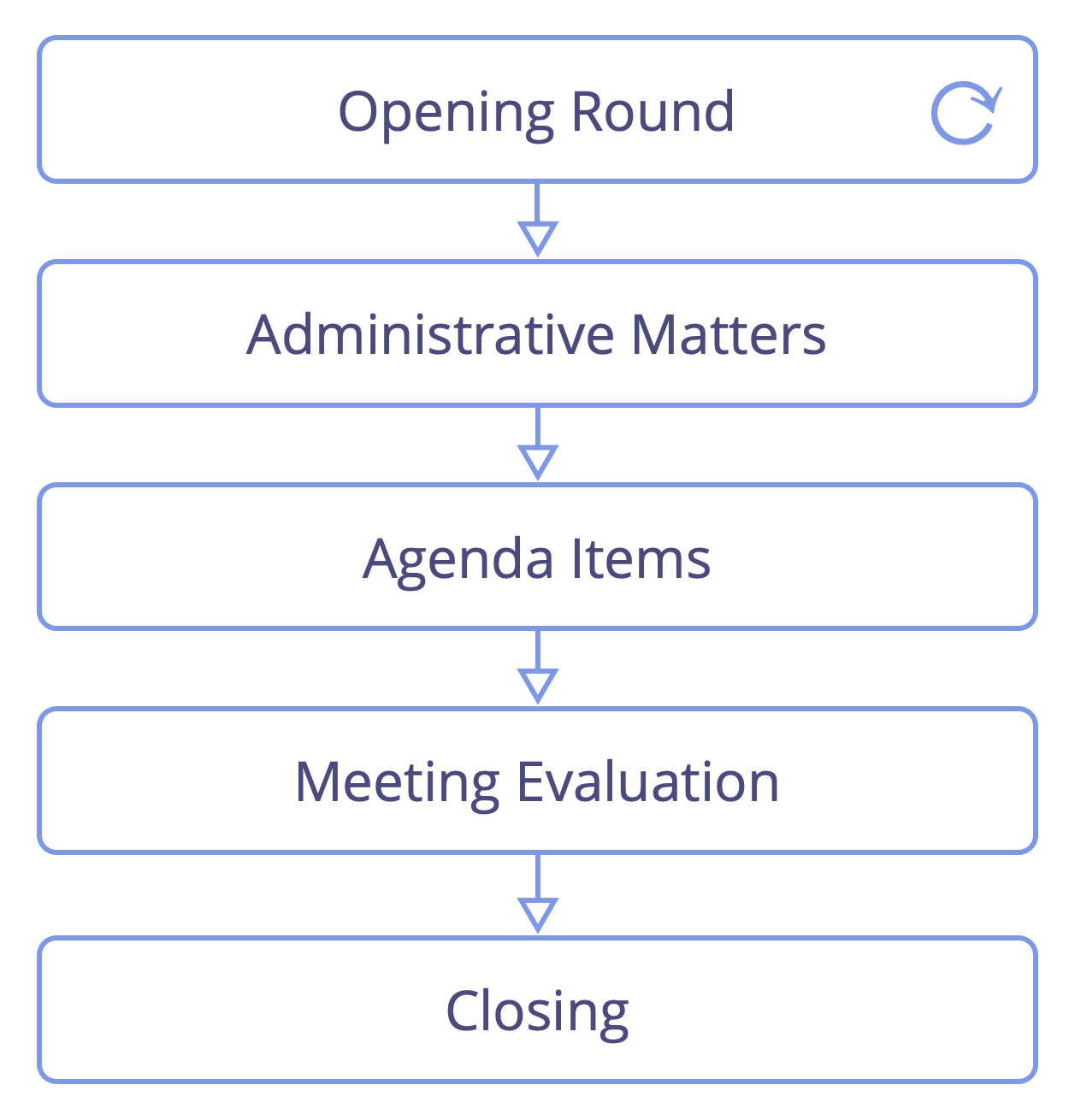
A typical governance meeting includes the following phases:
- Opening: check in with each other and attune to the objective of the meeting
- Administrative matters
- Check for consent to the previous meeting’s minutes
- Agree on a date for the next meeting
- Check for any last-minute agenda items and for consent to the agenda
- Agenda items (see below)
- Meeting evaluation: reflect on your interactions, celebrate successes and share suggestions for improvement
- Closing: Check in with each other before you leave the meeting.
Roles Involved in a Governance Meeting
- The Meeting Host is responsible for preparing and following up on the governance meeting.
- The Logbook Keeper records details of decisions, and keeps those records up to date and organized
- The Governance Facilitator
Agenda Items
Typical agenda items include:
- Any short reports
- Evaluation of existing policies (including domains) due for review
- Testing objections and, if they qualify, resolving them
- Determining requirements
- Forming proposals
- Deciding on policy
- Designing domains and deciding how to attend to domains (e.g. with new roles, circles or any other type of team)
- Selecting people for roles
For each agenda item, consider including the following details, to ensure clarity and help streamline preparations for the meeting:
- A description of the item
- An item owner, who is able to present the item and respond to questions
- What people should do to prepare in advance
- Specific actions
- Who to reach out to for clarifications
- Links to any relevant documentation
- Which process(es) are required
- A time box (how long you intend to spend on this item)
- What outcome you wish to achieve in the meeting.

 Read next: Daily Standup