
Three Principles for Transformation
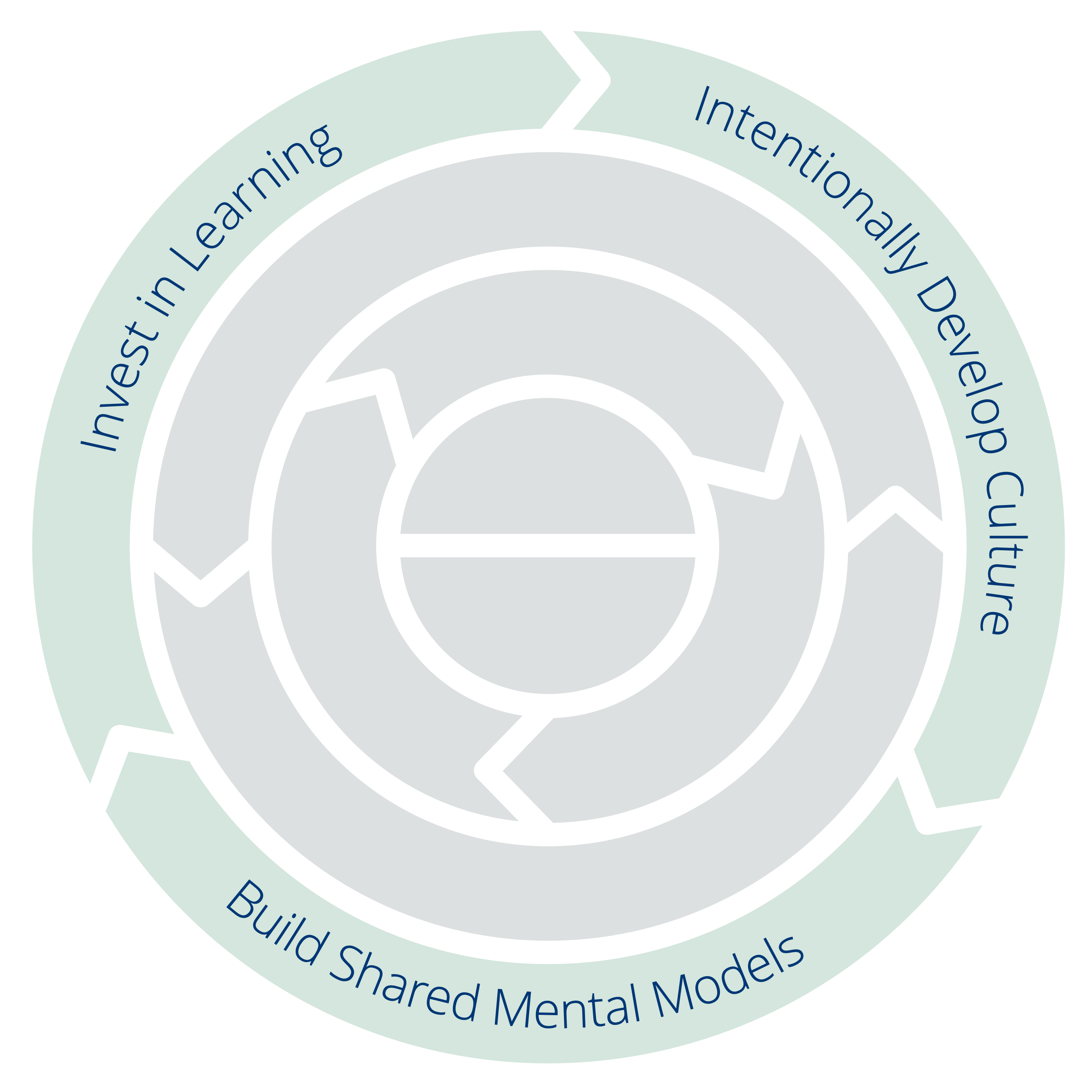
Principle 8 — Invest in Learning
Support everyone in developing their competence and skill, so that their contribution remains valuable and the organization can evolve.
Essential patterns to help you achieve this:
- Navigate via Tension — Everyone in the organization paying attention for situations where growing competence and skills may be valuable focuses the learning effort and facilitates continuous improvement.
- Evaluate Meetings — A brief evaluation at the end of each meeting or workshop helps people identify their strengths, growing edges, and ways to improve their contribution in the future.
- Peer Review — When teams or people in roles regularly invite relevant stakeholders for a review of their effectiveness, they can learn about their strengths and growing edges, and identify ways they can improve their contribution in the future.
- Development Plan — Collaborating with relevant stakeholders on a plan for how to develop necessary skills and competence is an effective way of focusing the learning efforts of a person in a role, or for a team.
- Peer Feedback — Inviting feedback from peers supports people in understanding their strengths and growing edges, so that they can invest in learning where helpful.
Principle 9 — Intentionally Develop Culture
Collaborate on fostering a cooperative culture where everyone can achieve their fuller potential, so that you build and maintain an engaging and productive work environment.
Essential patterns to help you achieve this:
- Artful Participation — Introducing the concept of Artful Participation to people invites them to pay conscious attention to how they contribute, and to make changes when they realize their current approach can be improved.
- Adopt the Seven Principles — The seven principles provide guidelines for behavior that enable a productive, engaging, and cooperative culture.
- Agree on Values — Agreement on fundamental guidelines for behavior in the organization defines ethical parameters for action and facilitates coherence.
- Evaluate and Evolve Policies — Regular review and intentional evolution of policies relating to culture keeps them alive in the consciousness of the people and helps identify when and how these policies can be improved.
- Contract for Successful Collaboration — Co-creating mutually beneficial agreements for collaboration from the start supports building and maintaining an engaging and productive working environment and a culture of trust between parties.
- Create a Pull System for Organizational Change — Distributing the responsibility for developing culture to everybody invites proactivity in addressing challenges and opportunities as they arise.
Principle 10 — Build Shared Mental Models
Invest in building shared mental models, so that everyone can engage in meaningful dialogue about what’s happening and what needs to be done, and in the process deepen their understanding of how the organization works, what it does and why.
Essential patterns to help you achieve this:
- Navigate via Tension — Looking out for, and addressing situations that could benefit from building or refining a shared mental model, helps people to get on the same page and supports productive dialogue.
- Determine Requirements — Determining what’s required to respond appropriately to an organizational driver before deciding what to do helps develop a shared understanding of the direction and scope of a suitable response to the driver.
- Clarify and Develop Domains — Explicitly clarifying and documenting areas of responsibility ensures a shared mental model regarding expectations and responsibilities.
- Clarify Intended Outcome — By first agreeing on the intended outcome of a proposed activity, project, or policy, people develop a shared understanding of where things should be headed and can then engage in productive dialog about how to get there.

 Read next: Where to Start?